Motorized Shades for Canadian Homes: Lutron Palladiom, Triathlon and Sivoia QS
Key Takeaways
- Lutron’s three shading platforms — Palladiom, Triathlon, and Sivoia QS — all work in new builds, renovations, and whole-home systems. There is no one-size-fits-one-project formula.
- Wireless shades run on ClearConnect RF, a proprietary frequency outside Wi-Fi bands. Lutron treats wire-free as first-class — not a compromise.
- Most whole-home projects mix two platforms under a single HomeWorks QSX or RadioRA 3 system.
- The fabric library is largely shared across all three lines — platform choice is about hardware design, form factors, and installation reality, not fabric.
How Motorized Shades Change the Feel of a Canadian Home
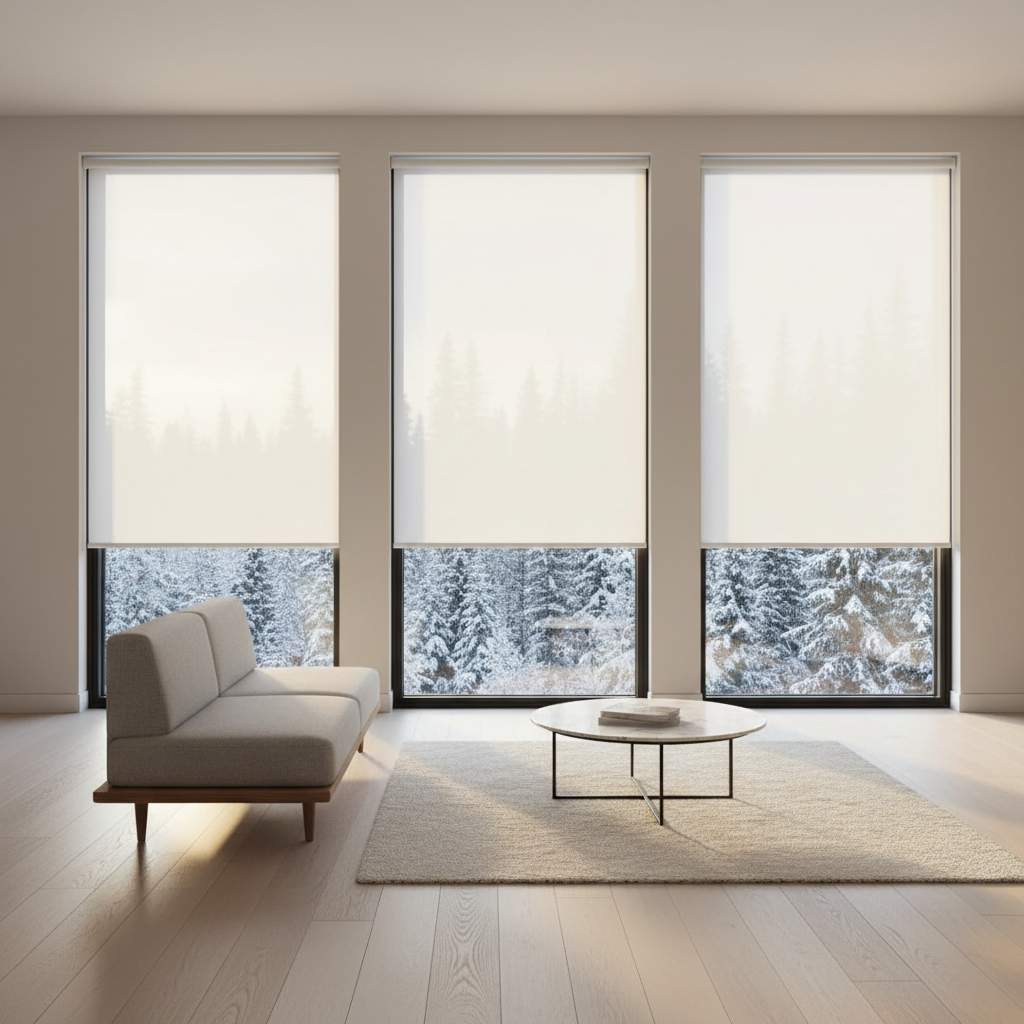
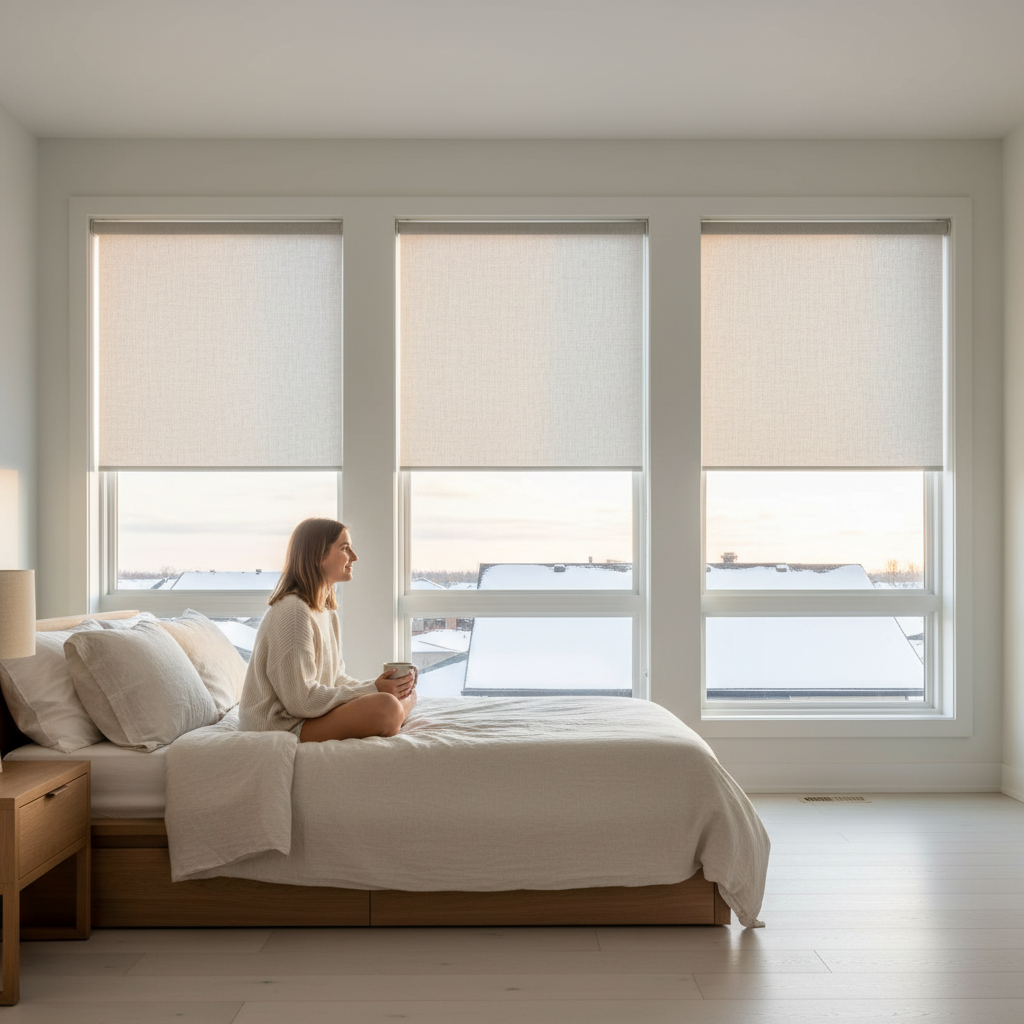
A winter morning: bedroom shades rise at sunrise while the bedside lamp warms to amber. Downstairs, south-facing shades have already dropped to cut the low winter glare. At night, one tap on a Sunnata keypad lowers every shade in the house, dims the hallway, and sets the family room for a movie.
In summer, shades manage solar heat gain automatically — reducing cooling load and protecting hardwood floors from UV fading amplified by snow reflection.
None of this requires pulling out a phone. Scenes, schedules, and daylight sensors handle it quietly in the background.
The Three Platforms
All three run on the same Lutron control backbone, so mixing them in one home is standard practice.
Palladiom
The architectural line. Solid aluminum or brass brackets with concealed fasteners — the brackets are the finish, no valance needed. Hembar alignment holds a row of shades level within 3 mm as they move together, monitored hundreds of times per second. At 35 dBA, installers describe it as close to silent. Programming buttons hide behind a rotating finishing ring — nothing visible on the hardware. Roller-only, up to 12’ × 14’.
A 12,000-square-foot mountain home recently chose Palladiom wire-free specifically to avoid opening drywall for pre-wire — proof that wire-free is not just a retrofit tool but a legitimate choice on large luxury builds.
Power failure memory lasts the lifetime of the product — a real consideration in Canadian winters where ice-storm outages are common.
Triathlon
A turnkey, valance-integrated chassis that ships as one piece. Covers the widest range of everyday form factors: rollers, honeycomb cellular, wood blinds, and Roman shades up to roughly 12’ × 12’. The drive monitors battery voltage to keep shade speed constant as D-cells deplete — cheaper battery shades slow down over time. IC-certified for Canada alongside FCC.
Sivoia QS
Lutron’s specialty platform. Handles everything rollers can’t: drapery tracks, horizontal sheers, venetian blinds, skylights, arched windows, tensioned shades, and outdoor applications through partner products. If your project includes non-rectangular openings, you’re in a Sivoia QS conversation for those — typically running alongside Palladiom or Triathlon for the standard windows.
What Shapes the Decision
The old “Palladiom for new builds, Triathlon for retrofits” framing is outdated. Integrators who work with all three lines daily will tell you the real decision factors are more nuanced:
| Palladiom | Triathlon | Sivoia QS | |
|---|---|---|---|
| Design intent | Exposed brackets — hardware is the finish | Enclosed valance — clean, self-contained | Hidden behind pocket or built-in valance |
| Form factors | Roller only | Roller, honeycomb, wood blind, Roman | Drapery, skylight, sheer, venetian, arched, outdoor |
| Power | Wired or wire-free | D-cell battery | Wired (24V QS link) |
| Sound | 35 dBA | 38 dBA | Varies by form factor |
| Battery life | 4–6 yrs (up to 8 with extension packs) | 3–5 yrs | N/A (wired) |
| Max roller size | 12’ × 14’ | 12’ × 12’ | Varies |
Design taste matters as much as project type. A homeowner renovating a mid-century modern might choose Palladiom for the exposed-bracket aesthetic. A new-build family home might pick Triathlon for the clean valance and broader form-factor range. Budget, window types, wiring access, acoustic sensitivity, and construction timeline all shift the shortlist — and most projects land on a mix of two platforms under one system.
The fabric library is largely shared across all three lines (sheer, translucent, room-darkening), so the “which fabric” decision is separate from the “which platform” decision. What differs is the hardware, the form factors, and how the shade presents itself in your room.
Lighting and Shade Integration
On HomeWorks QSX and RadioRA 3, shades and lights share a single control layer. One keypad scene dims the lights, lowers the shades, and can trigger audio or climate. Astronomical schedules move shades with local sunrise and sunset — useful in Canada where daylight shifts dramatically between January and June. Natural Light Optimization goes further, adjusting shades based on real-time daylight sensor readings.
Pico remotes, Sunnata keypads, and the Lutron app all control both lighting and shades from the same interface.
Getting Started
The right platform mix comes out of a site walk — measuring each opening, reviewing fabric options, discussing wiring access, and understanding your design priorities. Fabrication tolerances on Palladiom brackets and Triathlon valances are tight enough that an experienced integrator will measure twice and often build a mock-up before ordering.
Find a dealer near you to start planning.
FAQ
Can I mix platforms in the same home?
Yes. All three run on the same Lutron backbone — HomeWorks QSX or RadioRA 3 handles any combination. This is standard on whole-home projects.
Are wireless shades reliable?
ClearConnect RF runs on a proprietary frequency outside Wi-Fi bands. Lutron’s own HomeWorks QSX retrofit guidance lists wire-free Palladiom and Triathlon as first-class options — not a downgrade from wired.
How long do batteries last?
Lutron publishes 3–5 years for Triathlon and 4–6 years for Palladiom wire-free, based on roughly two open/close cycles per day. Real-world life varies with usage, shade size, and climate. Both use standard alkaline D-cells — easy to source and replace.
Is Triathlon certified for Canada?
Yes. IC (Industry Canada) certified alongside FCC — equipment intended for the Canadian market.